What Really Happens to Sexual Desire as We Age?
What Really Happens to Sexual Desire as We Age?

There is a strange idea that sexual desire comes with an expiry date.
When we’re young, we’re expected to be interested in sex. Desire is portrayed as spontaneous, energetic and sometimes inconveniently enthusiastic. Then, somewhere between sensible shoes and needing slightly better light to read a restaurant menu, we’re apparently supposed to become less interested.
Except human sexuality doesn’t work quite like that.
Sexual desire can certainly change as we age. Hormones change, our bodies change, and our relationships change too. Stress, medication, confidence, health and even how we feel about the person lying next to us can all influence how often desire appears.
However, changing isn’t the same as disappearing.
In fact, some people find their sex drive becomes less predictable with age, while others discover they’re enjoying their sexuality more than they did when they were younger.
So, what really happens to sexual desire as we age?
The answer is far more interesting than simply saying it goes down.
Desire Doesn’t Have a Dimmer Switch Marked “Age”
It would be wonderfully convenient if sexual desire followed a predictable graph.
At 20, lots of it. At 40, slightly less. At 60, considerably less. At 80, presumably everyone is drinking tea and discussing the weather.
Real life refuses to cooperate.
There are enormous differences between individuals. Some people experience a noticeable reduction in sexual desire as they get older. Others notice relatively little change. Meanwhile, some become more comfortable with, and interested in, their sexuality during later life.
The National Institute on Aging notes that some older couples actually report greater satisfaction with their sex lives than when they were younger. Fewer distractions, more privacy, freedom from pregnancy concerns and being better able to express what they want can all play a part.
Part of the confusion comes from treating sexual desire, sexual activity and physical arousal as though they’re the same thing.
They aren’t.
Someone may want sex but experience physical changes that make arousal slower. Another person may have a perfectly functioning body but very little interest in using it. Equally, someone may have sex less frequently simply because they don’t currently have a partner.
Therefore, counting how often somebody has sex doesn’t necessarily tell us how much sexual desire they experience.
Age matters, of course. But it’s only one part of a much larger picture.
Your 20s, 30s and 40s Aren’t Sexually Identical Either
We often talk about ageing and sexuality as though nothing changes until middle age.
Yet sexual desire evolves throughout adulthood.
In our 20s, hormones can play a powerful role, and desire may feel more spontaneous. However, younger adults are hardly immune to low libido. Anxiety, body confidence, contraception, poor relationships, stress and simply trying to work out what you actually enjoy can all affect desire.
By the 30s and 40s, life may become considerably busier. Careers, children, financial pressure, caring responsibilities and long-term relationships compete for attention.
You might still fancy your partner enormously and yet find yourself choosing sleep.
That’s not necessarily ageing. Sometimes it’s Tuesday.
Interestingly, these years can also bring greater sexual confidence. Many people understand their bodies better than they did at 21. They’re more comfortable communicating what they enjoy and, importantly, more willing to say what they don’t.
So, while spontaneous desire may change, sexual satisfaction doesn’t automatically follow the same path.
Sometimes experience brings something youth couldn’t provide… self-knowledge.
Hormones Matter, Just Not Quite as Simply as We Think
Eventually, we do have to talk about hormones.
For women, perimenopause and menopause can bring significant hormonal changes. Vaginal dryness, discomfort, disrupted sleep and other menopausal symptoms may make sex less appealing, while some women also experience changes in desire.
However, menopause does not automatically mean the end of sexual interest.
The National Institute on Aging points out that feelings about sex can change in either direction around menopause. Desire may decrease, but some women feel freer and more comfortable sexually, particularly once pregnancy is no longer a concern.
Men experience changes too.
Testosterone levels generally decline gradually with age, but it’s important not to confuse libido with erectile function. Wanting sex and getting or maintaining an erection are related, but they are not the same thing.
Erections may take longer, require more direct stimulation, or feel different with age. Erectile dysfunction also becomes more common. Nevertheless, a change in erection doesn’t automatically mean a man has stopped experiencing sexual desire.
Hormones influence desire, but they don’t operate alone. Physical health, medication, sleep, stress and emotional wellbeing matter too.
Therefore, blaming every change in libido on age can mean missing what is actually happening.
Sometimes the Body Needs More Time Than the Mind
Wanting sex and becoming physically aroused aren’t necessarily simultaneous events.
As we get older, physical responses can become slower. Erections may take longer to develop, while vaginal lubrication may take longer or become less pronounced. Orgasms can feel different too, and the body may simply require more stimulation than it once did.
These are recognised age-related changes, not proof that desire has disappeared.
The mind might already be very interested. The body is simply taking the scenic route.
Unfortunately, physical changes can sometimes create a psychological loop. One disappointing experience causes worry about the next one. That worry makes relaxation more difficult, which can affect arousal and create even more worry.
Suddenly, what began as an ordinary physical change starts affecting sexual confidence.
Understanding this can make an enormous difference.
Sex doesn’t need to follow the same script at 55 that it followed at 25. More time, more touch and less pressure can become part of the experience rather than evidence that something has gone wrong.

Spontaneous Desire Isn’t the Only Kind of Desire
This is where things become particularly interesting.
Many of us imagine desire beginning with a sudden thought:
“I want sex.”
Then comes touching, arousal and everything else.
That’s spontaneous desire, and it certainly exists. However, desire can also be responsive.
Responsive desire may appear after intimacy has already begun. You might not have been thinking about sex five minutes earlier, but affection, kissing, touch, conversation or simply feeling close to somebody awakens an interest that wasn’t previously demanding attention.
This isn’t merely a convenient theory.
Researcher Rosemary Basson proposed an influential model of sexual response in which desire doesn’t always have to arrive first. Instead, intimacy or sexual stimulation can lead to arousal, with desire developing as part of the experience.
Therefore, “I don’t randomly think about sex as often” doesn’t necessarily mean “I’ve lost my sexuality.”
The ignition system may simply work differently.
That distinction can be particularly important in long-term relationships, where waiting for two people to experience spontaneous desire at precisely the same moment can become a very long wait indeed.
The Biggest Libido Killer Might Not Be Your Birthday
Suppose somebody notices their sexual desire has dropped at 52.
Age seems the obvious explanation.
But what else is happening?
Perhaps they’re exhausted. Maybe their relationship has become distant. They could be taking medication that affects libido. They may feel uncomfortable with changes to their body, be dealing with stress, sleeping badly or experiencing a health problem.
Suddenly, “I’m getting older” doesn’t tell us very much.
The National Institute on Aging lists several types of medication that can interfere with sexual function, including some antidepressants, blood pressure medicines, sedatives and other treatments. Side effects can include reduced desire, erectile difficulties, vaginal dryness and problems with arousal or orgasm.
Then there is familiarity.
Long-term love can provide extraordinary intimacy, but novelty naturally becomes harder to maintain when you’ve shared a bathroom with someone for twenty years.
That doesn’t mean attraction has disappeared. However, desire often benefits from anticipation, curiosity and occasionally seeing your partner as a lover rather than simply the person who forgot to buy milk.
Age gets blamed for an awful lot that actually belongs elsewhere.
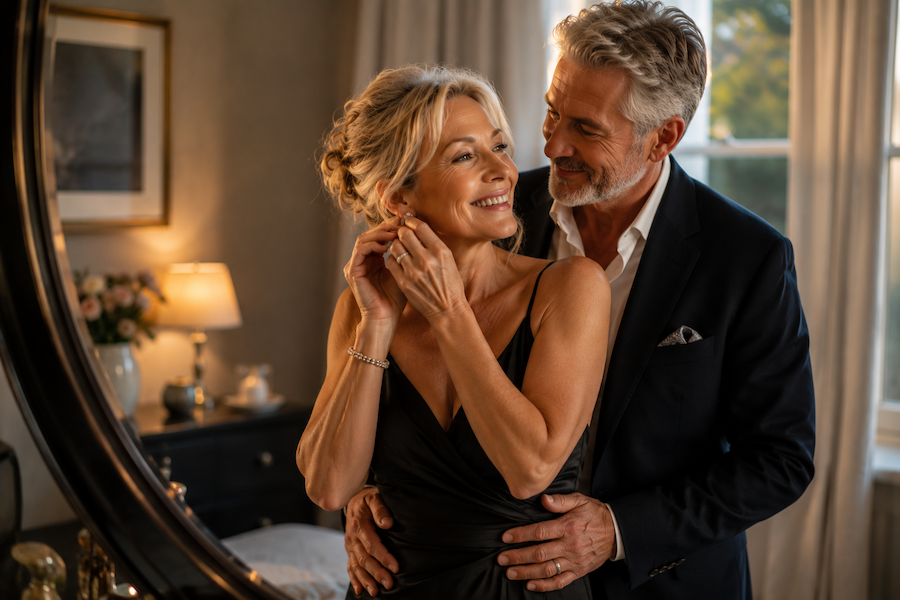
Why Some People Enjoy Sex More as They Get Older
Here’s the part of ageing and sexuality that doesn’t get discussed nearly enough.
For some people, getting older makes sex better.
Not necessarily more frequent. Not necessarily more athletic. Just better.
Confidence can be part of it.
With age, some people become less interested in performing for somebody else’s approval. Embarrassment can soften, communication can improve and there may be less pressure to make sex look like whatever we’ve been told “good sex” is supposed to look like.
There can also be a wonderful shift from wondering, “Am I doing this right?” to asking, “Do I actually enjoy this?”
Those are very different questions.
Older adults may have a clearer understanding of their fantasies, boundaries and preferences. Consequently, intimacy can become less about proving something and more about experiencing it.
Of course, age doesn’t magically deliver sexual confidence any more than turning 40 suddenly makes you understand pensions.
Nevertheless, experience can bring permission.
Permission to ask.
Permission to explore.
And, perhaps most importantly, permission to stop pretending to enjoy things you never particularly liked in the first place.
Relationships Can Age Faster Than Desire
Sometimes it isn’t our libido that’s become predictable.
It’s our relationship.
In a new relationship, anticipation happens almost automatically. You don’t know exactly when you’ll next see someone, what they’ll wear or whether a kiss will lead somewhere else.
After years together, mystery requires slightly more effort.
This matters because sexual desire doesn’t exist separately from the relationship around it. Resentment, lack of affection, poor communication and feeling taken for granted can affect attraction at any age.
On the other hand, emotional closeness can deepen desire.
Long-term partners may understand one another’s bodies extraordinarily well. They have history, trust and a shared language of intimacy that a new relationship simply hasn’t had time to develop.
Therefore, ageing together doesn’t have to mean becoming sexually invisible to one another.
Sometimes desire needs attention rather than rescue.
A little novelty, affection, flirting or deliberate time together can remind two people that underneath the shopping lists, responsibilities and familiar routines, they’re still lovers.
What About Sexual Desire in Our 60s, 70s and Beyond?
Popular culture has historically been rather uncomfortable with the idea of older people having sex.
Thankfully, reality has never required popular culture’s permission.
People can continue to experience attraction, fantasy, masturbation, intimacy and sexual relationships well into later life. Naturally, health and physical ability can affect what sex looks like, and some people lose interest altogether.
Others don’t.
New relationships can also appear later in life through divorce, bereavement or simply meeting somebody unexpectedly. For someone who has spent decades in one relationship, suddenly feeling sexually attracted to a new person can be surprisingly powerful.
Bodies may require adaptation. Expectations may need adjusting. However, intimacy has never depended upon youth alone.
Touch still matters.
Feeling desired still matters.
Connection still matters.
And sexual curiosity doesn’t necessarily disappear simply because the candles on the birthday cake have become a minor fire hazard.
So, Does Sexual Desire Decline With Age?
For some people, yes.
For others, not particularly.
And for many, the more accurate answer is… it changes.
Ageing can alter hormones, physical arousal and the way desire begins. Health, medication, relationships, stress and confidence can influence it further. However, none of those factors gives us a universal age at which sexual desire is supposed to disappear.
Perhaps that’s the misconception worth leaving behind.
Sexuality isn’t something we possess when we’re young and gradually surrender as the years pass.
It evolves with us.
The things that attracted you at 25 may not be the things that attract you at 55. Desire may become less spontaneous but more responsive. Sex may happen less often while becoming more satisfying. Or you might discover interests and fantasies you finally feel confident enough to acknowledge.
Getting older doesn’t guarantee better sex, and it certainly doesn’t guarantee worse sex.
It simply means the conversation between your mind, your body and your desires may change.
And perhaps the most interesting part of ageing isn’t discovering how much desire you’ve lost…
It’s discovering how much of it you finally understand.
Research and Further Reading
The National Institute on Aging provides an excellent evidence-based overview of the physical and emotional changes that can affect sexuality in later life, including changes in arousal, erections, lubrication, medication and relationships.
Rosemary Basson’s published research on sexual response explores why sexual desire does not always need to occur before intimacy or arousal, particularly within established relationships.
National Institute on Aging: Sexuality and Intimacy in Older Adults
PubMed: Rosemary Basson, The Female Sexual Response: A Different Model

Let yourself be carried away into the exciting world of sex swings. Give into the enchantment of the romance, passion, and deep sensuality that come with celebrating your love together. Surrender to the unique feeling of deep intimacy through shared peaks of passion.
Affiliate Disclosure:
Some of the links on this site are Amazon affiliate links, which means I may earn a small commission if you make a purchase through them – at no extra cost to you. This helps support the blog and keeps the content coming. Thanks for your support!
❤️ Experience Transcendent Pleasure with Sue:
Elite Sensual Massage Artistry
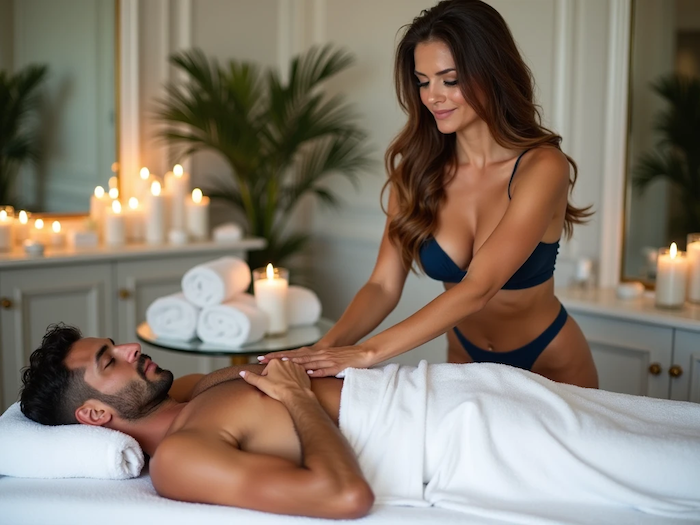
Step Into Your Private Paradise of Ecstasy
Picture this: you arrive at a discreet, luxurious sanctuary where the world fades away. Soft lighting and warm ambient music create instant calm. Every muscle tension melts under Sue’s expert, sensual touch – a premier sensual massage artist who transforms routine relaxation into unforgettable erotic journeys.
Sue doesn’t just massage; she awakens your deepest desires. Her intuitive artistry reads your body’s unspoken needs, delivering customised pleasure that leaves you breathless and craving more.
Experience – What You’ll Feel – Perfect For
Full Body Surrender –
Complete relaxation + targeted pleasure
Stress relief + sensual awakening
Tantric Ritual –
Slow, energy-building ecstasy
Spiritual + physical connection
Bespoke Erotic Massage –
Fantasy fulfilment
Personalised pleasure
Lingam Worship –
Prostate + sacred masculine energy
Men seeking profound release
Yoni Massage –
Deep feminine healing + orgasmic waves
Women embracing sensuality
Couples Sessions –
Shared intimacy + guided exploration
Reigniting passion
❤️ Ready to indulge? Call Sue on 07504 937253 or email [email protected] to book your private sensual massage today.
📇 Suggested Reading:
🌶️ Sue’s After Dark Diaries Episode 47 Apparently, I Was Supposed to Look
The Bachelor Files Ep 14 The Morning I Should Have Gone Home
The Closure They Never Gave You | Reflections
Why We Want What We Can’t Have: The Psychology of Desire
🌶️ Sue’s After Dark Diaries Episode 46 The Holiday That Definitely Didn’t Go to Plan
🌶️ Sue’s After-Dark Diaries – Episode 45 Dan Does the Spin Cycle
📧 Drop Me a Line, You Naughty Wanderers…
Hey, my deliciously daring darlings… I can practically feel the secrets tingling between your toes. That midnight tiptoe across a hotel carpet, the sly brush of an ankle under the dinner table, the time your feet led you straight into trouble, and you loved every scandalous second.
Why hoard those toe-curling tales? Kick off your heels, wiggle free, and spill the juiciest, most wicked foot-fetish confessions you’ve got. I want the stories that make my pulse race, my cheeks flush, and my soles itch to join the fun.
Think you’ve got what it takes to make me squirm? Slide your steamiest secret into my inbox at [email protected] . Fair warning: I’m hard to shock… but a bold, barefooted confession? That just might do it.