After Dark Diaries
The Evolution of Mental Health:
The Evolution of Mental Health:

Imagine travelling back to 1985 and telling someone that, in the future, people would openly discuss anxiety on social media, attend therapy sessions through their smartphones, practise mindfulness during their lunch breaks, and encourage friends to prioritise their mental wellbeing in the same way they prioritise physical fitness.
They’d probably think you were joking.
Four decades ago, conversations about mental health were often kept behind closed doors. Many people struggled silently, unsure of who to talk to or worried about how they might be judged if they admitted they were finding life difficult. Feelings of anxiety, depression, or emotional exhaustion certainly existed, but they were rarely discussed as openly as they are today.
Fast forward to 2026, and the picture looks remarkably different.
Mental health is now part of everyday conversation. Schools teach emotional wellbeing. Workplaces offer wellbeing initiatives. Celebrities, athletes, business leaders, and even members of the Royal Family have spoken publicly about their own mental health experiences. Therapy has become increasingly accepted, and millions of people use meditation apps, online counselling services, or self-care routines to look after their emotional wellbeing.
On the surface, this seems like enormous progress, and in many ways, it absolutely is.
Yet alongside this growing awareness comes another interesting question.
If we’re talking about mental health more than ever before, why do so many people still feel overwhelmed, stressed, lonely, and emotionally exhausted? Why do terms like burnout, anxiety, and emotional fatigue seem to appear in everyday conversations so frequently? Have our mental health challenges genuinely become greater, or have we simply become better at recognising and discussing them?
The answer isn’t straightforward.
Every generation faces its own unique pressures. The world of the 1980s wasn’t perfect, just as the world of 2026 certainly isn’t. However, understanding how our attitudes towards mental health have evolved helps us appreciate both how far we’ve come and where we still have work to do.
Ultimately, the story of mental health isn’t simply about illness.
It’s a story about society.
It’s a story about changing attitudes, shifting expectations, scientific understanding, and perhaps most importantly, learning that looking after our minds deserves just as much attention as looking after our bodies.
The 1980s: When Mental Health Stayed Quiet
If you grew up during the 1980s, you’ll probably remember a very different world.
Life moved at a slower pace.
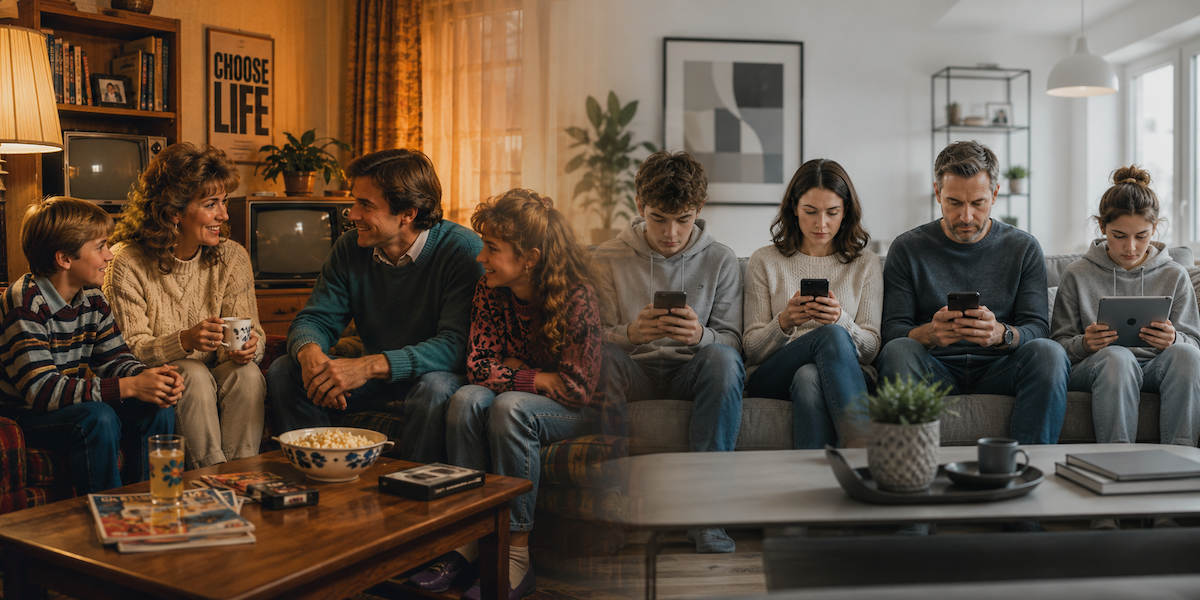
There were no smartphones constantly demanding attention. Social media didn’t exist. Once you left work for the day, colleagues couldn’t instantly contact you through messaging apps. Family dinners were less likely to be interrupted by notifications, and weekends often felt like genuine breaks rather than extensions of the working week.
There was something wonderfully simple about that.
Children spent hours outdoors playing with friends until the streetlights came on. Neighbours knew one another. Families often gathered around the television together rather than disappearing into separate rooms with individual screens.
Of course, the 1980s weren’t some perfect golden age. Every generation tends to look back through nostalgic lenses, remembering the highlights while forgetting many of the challenges.
However, attitudes towards mental health were undeniably different.
For many people, emotional struggles were viewed as private matters rather than topics for open discussion.
Phrases such as “pull yourself together,” “keep your chin up,” or “just get on with it” reflected the cultural mindset of the time. While these comments were rarely intended to be unkind, they often suggested that emotional difficulties were simply obstacles to overcome through determination.
Seeking therapy wasn’t something people talked about over coffee with friends.
Many individuals associated counselling with severe mental illness rather than everyday emotional wellbeing. If someone admitted they were seeing a therapist, they often worried about being misunderstood or judged.
Men, in particular, faced enormous pressure to appear emotionally strong.
Traditional ideas of masculinity encouraged resilience, independence, and stoicism. Expressing vulnerability was sometimes viewed as weakness rather than courage.
Women also experienced challenges.
Although emotional expression was generally more accepted, many still felt pressure to quietly cope with family responsibilities, careers, or personal struggles without seeking professional support.
Mental health certainly existed.
People experienced anxiety.
They experienced depression.
They experienced grief, burnout, loneliness, and trauma.
The difference was that these experiences were often hidden rather than discussed.
The Strengths of a Simpler Time
While mental health awareness has improved enormously since the 1980s, it’s also worth recognising that earlier generations benefited from aspects of life that naturally supported emotional wellbeing.
The community often felt stronger.
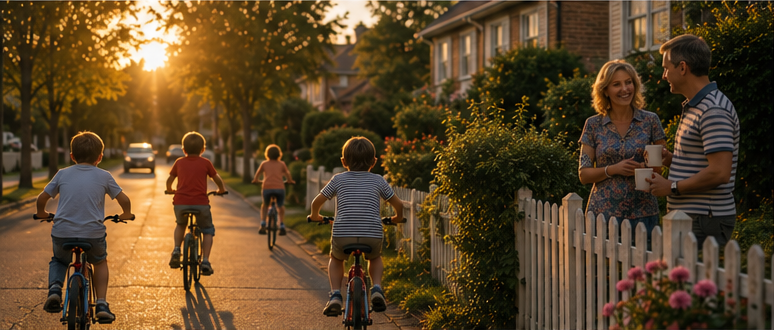
Many people knew their neighbours well enough to stop for a chat over the garden fence. If you grew up during the 1980s, you’ll probably remember hearing one sentence almost every evening:
“Be home before it gets dark.”
Children disappeared on their bikes for hours at a time, inventing games, knocking on friends’ doors rather than sending messages, and somehow always finding something to do.
Parents generally had little way of contacting them until they came home for tea.
Families were more likely to spend evenings together because entertainment options were limited.
Social interaction happened almost automatically.
People didn’t need to organise every conversation through group chats or calendar invitations.
Friendships developed naturally through workplaces, schools, local clubs, churches, pubs, sports teams, and neighbourhoods.
Face-to-face connection was simply part of daily life.
Today, ironically, despite being digitally connected almost constantly, many people report feeling increasingly isolated.
The slower pace of life also offered something many people now struggle to find.
Mental space.
Without endless notifications, twenty-four-hour news cycles, and social media feeds competing for attention, people’s minds experienced fewer interruptions throughout the day.
Stress certainly existed.
Financial worries existed.
Family problems existed.
Work pressures existed.
But many of today’s constant digital demands simply hadn’t arrived yet.
That doesn’t mean life was easier.
It means life was different.
When Silence Became a Problem
Despite these strengths, there was a significant downside to the culture of emotional silence.
People often suffered alone.
Someone experiencing depression might believe they need to work harder or become stronger.
Someone struggling with anxiety might assume they were worrying unnecessarily rather than recognising that professional help could make a genuine difference.
Mental health conditions were frequently misunderstood.
Misconceptions and stigma discouraged people from asking for support.
In some cases, individuals delayed seeking help until their struggles became overwhelming.
This wasn’t because people lacked compassion.
Rather, society lacked understanding.
Scientific research into mental health has expanded dramatically over the past forty years, improving both diagnosis and treatment.
Today, we recognise that mental health exists on a spectrum.
Just as physical health can fluctuate throughout life, emotional wellbeing can change depending on circumstances, stress, relationships, sleep, physical health, and countless other factors.
That understanding just wasn’t as widespread during previous decades.
The Turning Point: When the Conversation Began to Change
As the 1990s unfolded, attitudes slowly began shifting.
The change didn’t happen overnight.
There wasn’t one defining moment that transformed society’s thinking.
Instead, progress came gradually through education, research, media coverage, and growing public awareness.
Psychologists and medical professionals gained a better understanding of common mental health conditions.
Campaigns encouraged people to seek help earlier.
Schools slowly began to acknowledge emotional wellbeing alongside academic achievement.
Celebrities also played an important role.
When well-known public figures shared their own experiences with anxiety, depression, or addiction, they challenged long-standing stereotypes.
People began realising that mental health difficulties could affect anyone.
Not just those on the margins of society.
Not just those facing extreme circumstances.
Anyone.
Around the same time, the internet quietly transformed access to information.
For the first time, people could privately research symptoms, read about therapy, or learn more about emotional wellbeing without immediately discussing it with others.
Information became more accessible.
Knowledge reduced fear.
And gradually, conversations became easier.
The Rise of Self-Care
By the 2010s, a phrase that had once been relatively uncommon entered everyday language.
Self-care.
Initially, many people misunderstood the term.
Some assumed self-care simply meant taking bubble baths, lighting scented candles, or treating yourself to a spa day.
While those activities can certainly be relaxing, genuine self-care runs much deeper.
True self-care involves recognising that physical and mental wellbeing are connected.
It means getting enough sleep, moving your body regularly, eating nourishing food, and maintaining healthy relationships.
It also means taking breaks before reaching exhaustion, learning when to ask for help, setting healthy boundaries, and making time for activities that restore rather than drain your energy.
Gradually, people began understanding that looking after mental health wasn’t selfish.
It was necessary.
Workplaces also started paying attention.
Many employers introduced wellbeing programmes, flexible working arrangements, mental health first aiders, and employee assistance services.
Schools expanded conversations around emotional resilience.
Universities increased counselling provision.
Healthcare professionals encouraged earlier intervention.
Little by little, society became more comfortable discussing emotional wellbeing.
This represented genuine progress.
Then Came the Smartphone Revolution
Just as awareness was improving, another enormous societal shift quietly began reshaping daily life.
The smartphone.
At first, it seemed entirely positive.
Instant communication.
Maps in your pocket.
Unlimited information.
Entertainment anywhere.
Connection with family across the world.
These innovations changed modern life beyond recognition.
However, they also introduced challenges that nobody had fully anticipated.
Suddenly, work could follow us home.
Emails arrived late into the evening.
Notifications interrupted meals.
Social media encouraged constant comparison.
News updates became relentless.
People stopped simply waiting in queues or sitting quietly on trains.
Every spare moment became an opportunity to scroll.
The average day became filled with hundreds of tiny interruptions.
Each notification seemed insignificant.
Together, however, they created something entirely new.
A world where the mind rarely had an opportunity to switch off.
When the Office Moved Into Our Pockets
One of the biggest changes many adults have experienced over the past twenty years isn’t simply the arrival of smartphones.
It’s the way work quietly followed us home.
If you worked in an office during the 1980s or even much of the 1990s, the end of the working day usually meant exactly that.
You finished your shift, locked your desk, switched off the lights, and headed home.
For most people, work stayed where it belonged.
Of course, there were exceptions. Doctors, emergency workers, business owners, and those on call often carried additional responsibilities. But for many office workers, evenings and weekends genuinely belonged to them.
Today, things are very different.
The office no longer has walls.
It travels with us.
Emails arrive during dinner.
Messages appear while we’re watching television.
Notifications interrupt family time.
Even holidays often begin with the promise of “I’ll just check my emails once a day.”
Before long, that “once a day” becomes several times a day.
Without realising it, many of us have become permanently connected to work.
The result isn’t simply longer working hours.
There are fewer opportunities for our minds to fully switch off.
The Information Age
Imagine explaining an ordinary Tuesday morning in 2026 to someone living in 1985.
Before you’ve even finished your first cup of tea, your brain may already have switched between dozens of different thoughts and tasks. You may already have checked the weather, read overnight news headlines, glanced at your bank account, replied to a couple of messages, looked through your work emails, checked your calendar, scrolled social media, and perhaps even watched a short video or two.
None of those things seems particularly demanding on their own.
The challenge is that our brains rarely experience them one at a time.
Instead, they arrive together, competing for our attention before the day has properly begun.
Forty years ago, much of that information just didn’t exist.
News arrived at fixed times.
Letters took days.
Most conversations happened face-to-face.
When people wanted to contact you, they usually had to wait.
Today, information never stops flowing.
Our brains are processing more decisions, more notifications, and more interruptions than any previous generation.
Perhaps it’s no surprise that so many people finish the day feeling mentally exhausted without ever having done anything physically demanding.
Living in a Constant State of Stimulation
One of the biggest differences between the 1980s and 2026 isn’t simply technology itself.
It’s the sheer volume of information our brains process every day.
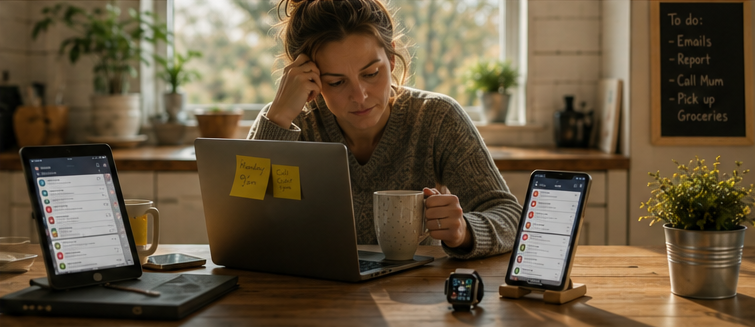
Within minutes of waking, many people check emails, read news headlines, scroll through social media, reply to messages, and begin thinking about work before even getting out of bed.
The brain has barely had time to wake up before it’s already processing dozens of different demands.
Throughout the day, attention shifts continuously.
A work email.
Another text message.
A social media notification.
Breaking news.
Another meeting.
Another reminder.
One more alert.
This constant stimulation doesn’t necessarily cause mental health problems on its own.
However, it does make genuine rest increasingly difficult.
Many people describe feeling mentally exhausted despite spending large portions of the day sitting down.
That’s because mental energy isn’t only consumed through physical effort.
Decision-making, multitasking, information processing, and constant switching between tasks all place demands on the brain.
For many, the mind never truly gets a break.
And when the mind doesn’t rest, emotional wellbeing can begin to suffer.
Social Media: A Blessing and a Burden
There’s no denying that social media has changed the way we communicate.
It has reunited families separated by continents, allowed old school friends to reconnect decades later, given small businesses a global audience, and provided people with access to information that previous generations could only have dreamed of.
It has also transformed conversations around mental health.
Today, someone struggling with anxiety can find supportive communities online within minutes. People openly share their experiences with depression, grief, burnout, and trauma, helping others realise they’re not alone. Campaigns promoting mental wellbeing can reach millions of people in a matter of hours, something that would have been impossible just a few decades ago.
These are remarkable achievements.
However, like many aspects of modern life, social media is a double-edged sword.
The same platforms that educate and connect us can also leave us feeling inadequate, isolated, or emotionally drained.
Have you ever opened your favourite social media app intending to spend just a few minutes catching up with friends, only to realise nearly an hour has disappeared?
Perhaps someone has announced a promotion at work.
Another person has just gotten engaged.
A friend is posting photographs from an idyllic beach holiday while you’re sitting at home wondering whether you’ve remembered to put the bins out.
Another has completed a marathon.
Someone else has renovated their dream home.
Individually, these posts seem harmless.
Collectively, however, they can create the illusion that everyone else’s life is moving forwards while ours has somehow stood still.
Of course, deep down, we know social media only shows carefully selected highlights. People rarely share the arguments, disappointments, sleepless nights, financial worries, or moments of self-doubt that exist behind the camera.
Yet our brains don’t always remember that.
Instead, comparison quietly creeps in.
Without even noticing, we begin measuring our ordinary Tuesday afternoon against somebody else’s best day of the year.
That isn’t a fair comparison.
But it’s one many of us make every single day.
The Pressure to Always Be “On”
One of the biggest changes between the 1980s and today isn’t simply technology itself.
It’s the expectation that we should always be available.
There was a time when leaving the office meant leaving work behind.
If someone wanted to speak to you, they usually had to wait until the next working day. Evenings belonged to family, hobbies, or simply putting your feet up after a long day.
Today, those boundaries have become increasingly blurred.
Work emails arrive long after dinner.
Group chats continue late into the evening.
Notifications flash across our screens during meals, holidays, and weekends.
Even when we’re technically relaxing, our minds often remain switched on.
Many people now experience something psychologists refer to as continuous partial attention.
Rather than focusing fully on one task, we’re constantly dividing our attention between several things at once.
We’re watching television while checking emails.
Listening to podcasts while replying to messages.
Cooking dinner while scrolling through social media.
Walking the dog while taking work calls.
Little by little, we’ve become accustomed to living with constant mental stimulation.
The problem isn’t simply that we’re busy.
It’s that our minds rarely have permission to rest.
Even moments that once encouraged reflection- waiting for a bus, standing in a queue, or sitting quietly with a cup of tea… are often filled by reaching for our phones.
Silence has become surprisingly unfamiliar.
When Being Busy Became a Badge of Honour
Somewhere along the way, society also began celebrating busyness.
Ask someone how they’ve been recently, and one of the most common responses is:
“Busy.”
It’s almost become a status symbol.
Being busy can sometimes make us feel productive, important, or successful.
But constantly rushing from one commitment to another comes at a cost.
The human brain wasn’t designed to operate at full speed every waking hour.
Without periods of genuine recovery, stress gradually accumulates.
That’s one reason why the word burnout has become part of everyday language.
Forty years ago, people certainly worked hard.
Many worked physically demanding jobs with long hours.
The difference today is that work often follows us everywhere.
Laptops sit on kitchen tables.
Phones buzz beside the bed.
Even holidays are interrupted by the temptation to “just check one email.”
Over time, those small interruptions add up.
Many people don’t suddenly burn out overnight.
Instead, they slowly become emotionally exhausted without realising it’s happening.
They continue functioning.
They keep smiling.
And they meet deadlines.
Yet inside, they feel increasingly drained.

Loneliness in the Most Connected Generation
Perhaps one of the greatest paradoxes of modern life is this:
We have never been more connected.
Yet many people have never felt more alone.
At first glance, this doesn’t seem to make sense.
We can message friends instantly.
Video call relatives across the world.
Join online communities based on almost any interest imaginable.
Follow thousands of people on social media.
Surely this should make loneliness a thing of the past.
Yet meaningful human connection isn’t measured by the number of contacts stored on a smartphone.
It’s measured by the quality of our relationships.
Think about the last time someone sat beside you without looking at their phone.
Or the last time you had a conversation that lasted hours without anyone checking notifications.
Those moments feel increasingly rare.
Technology has given us more ways to communicate than ever before.
But communication and connection aren’t always the same thing.
A text message can brighten someone’s day.
A video call can help families stay close across long distances.
However, they rarely replace the warmth of sitting together in the same room, sharing laughter, conversation, or simply comfortable silence.
Humans are social creatures.
We thrive on eye contact.
We read facial expressions.
We’ll notice body language.
And we find comfort in physical presence.
These subtle experiences shape our emotional wellbeing far more than we often realise.
The Rise of Burnout
The term burnout hardly featured in everyday conversations during the 1980s.
Today, almost everyone has heard it.
Some have experienced it themselves.
Others know friends, colleagues, or family members who have.
Burnout isn’t simply feeling tired after a busy week.
It’s a state of emotional, physical, and mental exhaustion that builds over time.
People experiencing burnout often describe feeling detached from work, lacking motivation, struggling to concentrate, or feeling as though even simple tasks require enormous effort.
The causes vary.
For some, it’s excessive workloads.
For others, financial pressure, caregiving responsibilities, or prolonged stress.
Increasingly, however, experts recognise that burnout isn’t only about working too much.
It’s also about recovering too little.
When every spare moment becomes another opportunity to answer emails, scroll social media, consume news, or think about tomorrow’s responsibilities, the brain never fully resets.
Rest isn’t simply the absence of work.
It’s the presence of recovery.
And recovery requires something modern life often struggles to provide.
Space.
Time to think.
Time to breathe.
And time to simply exist without constantly responding to the next demand.
The Positive Side of Awareness
With all this talk of rising stress and modern pressures, it would be easy to assume that today’s approach to mental health has failed.
That couldn’t be further from the truth.
In many ways, we’ve made extraordinary progress.
Today, millions of people recognise the signs that they need support far earlier than previous generations might have done.
Children are increasingly taught that emotions are normal and that asking for help isn’t something to be ashamed of.
Employers are becoming more aware that employee wellbeing influences productivity, creativity, and long-term success.
Friends are more likely to ask each other, “How are you really doing?” rather than accepting a quick “I’m fine.”
Perhaps most importantly, we’ve begun replacing judgment with understanding.
People no longer need to suffer in silence simply because they’re worried about what others might think.
That shift alone has changed countless lives.
And while there is still progress to be made, it’s important to recognise just how significant this cultural transformation has been.
The conversation has changed.
The stigma has reduced significantly.
And that’s something worth celebrating.
Have We Become Too Quick to Label Normal Emotions?
As conversations around mental health have become more open, another interesting discussion has emerged.
Have we become better at recognising genuine mental health conditions, or have we also become more likely to label ordinary human emotions as something more serious?
This is a sensitive topic, and it’s important to approach it with balance.
On one hand, increased awareness has undoubtedly saved lives. People are recognising the signs of anxiety, depression and other mental health conditions earlier than ever before, allowing them to seek support before their struggles become overwhelming.
That’s genuine progress.
On the other hand, life has always involved difficult emotions.
Sadness after losing someone we love.
Stress before an important interview.
Nervousness on the first day of a new job.
Heartbreak after the end of a relationship.
Disappointment when things don’t go our way.
These experiences are not signs that something is necessarily wrong with us.
They’re signs that we’re human.
Some psychologists have expressed concern that modern society occasionally blurs the line between everyday emotional experiences and diagnosable mental health conditions. This doesn’t diminish the seriousness of genuine mental illness. Rather, it reminds us that not every uncomfortable feeling requires a clinical label.
Feeling anxious before giving a presentation doesn’t automatically mean someone has an anxiety disorder.
Feeling exhausted after months of juggling work, family commitments, and financial pressures doesn’t necessarily mean someone is experiencing clinical burnout.
Likewise, feeling low after a significant life event isn’t the same as living with clinical depression.
Understanding these distinctions matters.
It allows us to validate genuine mental health conditions while also recognising that emotional discomfort is a natural part of life.
Perhaps one of the healthiest messages we can embrace is this:
It’s okay not to feel okay.
But it’s also okay to experience a range of emotions without assuming something is fundamentally wrong.
Learning to navigate life’s ups and downs is part of being human.
Knowing when those emotions become persistent, overwhelming, or begin affecting daily life is when seeking professional support becomes especially important.
Finding that balance may be one of the greatest mental health challenges of the modern age.
What the 1980s Can Teach 2026
Looking back isn’t about longing for the past.
It’s about recognising that every generation has something valuable to offer.
The 1980s, despite their shortcomings, remind us of several timeless truths.
Life didn’t revolve around constant notifications.
People were more likely to be fully present during conversations because there wasn’t a phone buzzing every few minutes demanding attention.
Weekends generally felt like weekends.
When work finished on a Friday evening, many people genuinely switched off until Monday morning.
Communities often felt closer.
Children played outside until dusk, neighbours chatted over garden fences, and spontaneous visits to friends or relatives were far more common than sending a quick message asking if they were free in three weeks’ time.
There was also an underlying resilience that many people admire.
Difficult situations were often approached with determination and practicality.
People found ways to adapt because, in many cases, they felt they had little alternative.
Of course, resilience isn’t about ignoring emotions.
Nor should it be confused with suffering in silence.
However, developing the ability to cope with setbacks remains an important life skill.
Perhaps that’s one lesson worth carrying forward.
Modern life sometimes encourages us to search for immediate solutions to every uncomfortable feeling.
Yet not every challenge can be solved instantly.
Some experiences just require patience, perspective, and time.
What 2026 Can Teach the 1980s
At the same time, today’s society has made extraordinary strides that deserve recognition.
Perhaps the greatest achievement is that we’ve normalised conversations about mental health.
Children are increasingly encouraged to talk about their feelings.
Schools teach emotional wellbeing alongside academic subjects.
Employers are recognising that healthy employees are happier, more productive and more engaged.
Friends are becoming more comfortable asking meaningful questions rather than accepting automatic responses of “I’m fine.”
Therapy has also become more accessible.
For previous generations, seeking counselling often carried an unnecessary stigma.
Today, many people view therapy in much the same way they view visiting a physiotherapist or dentist.
It’s simply another form of looking after yourself.
That’s an incredibly healthy shift.
Modern society has also become better at recognising that mental health exists on a spectrum.
People don’t have to reach a breaking point before asking for support.
Seeking help early isn’t weakness.
It’s often one of the strongest decisions someone can make.
Perhaps that’s the lesson earlier generations might have benefited from hearing more often.
You don’t have to carry everything alone.
The Best of Both Worlds
Maybe the answer isn’t choosing between the attitudes of the 1980s and those of 2026.
Perhaps the healthiest future lies somewhere in the middle.
Imagine combining the resilience, community spirit and slower pace of previous generations with today’s openness, compassion and willingness to seek help.
Imagine living in a world where people feel comfortable discussing their mental health without believing they have to analyse every emotion.
Where resilience and vulnerability exist side by side.
Where strength isn’t measured by how much someone can silently endure, but by knowing when to persevere and when to ask for support.
That feels like progress.
Because resilience without compassion can become isolation.
Yet compassion without resilience can sometimes leave us believing we’re less capable than we truly are.
The healthiest mindset may be one that embraces both.
Life will always include challenges.
There will always be loss, disappointment, uncertainty, and stress.
But there will also always be hope, connection, laughter, kindness, and the remarkable ability of human beings to adapt.
Perhaps that’s something every generation has shared, even if we haven’t always recognised it.
What Has Never Changed About Good Mental Health
For all the extraordinary changes we’ve witnessed over the past forty years, one truth has remained remarkably constant.
Human nature hasn’t changed nearly as much as the world around us has.
We’ve invented smartphones, embraced artificial intelligence, connected billions of people through the internet, and transformed the way we work, communicate, and entertain ourselves. Yet despite these incredible advances, our minds still respond to many of the same things they always have.
Children still flourish when they feel encouraged.
Teenagers continue searching for acceptance and a place they truly belong.
Adults, no matter how successful they appear, still need purpose, meaningful relationships, and moments of genuine rest.
As we grow older, companionship often becomes even more valuable than possessions.
Throughout every stage of life, there are certain things that remain remarkably constant.
A heartfelt conversation can still lift our spirits.
Laughter still eases tension.
Time spent outdoors still clears a busy mind.
Acts of kindness continue to remind us that we’re part of something bigger than ourselves.
A reassuring hug still says things that words sometimes cannot.
Technology has transformed almost every aspect of modern life, but it hasn’t altered these simple human truths.
Our emotional needs are timeless.
Perhaps they’ve always been.
It’s easy to assume that the latest app, productivity hack, or wellbeing trend will unlock the secret to happiness, but when researchers study the foundations of long-term wellbeing, the answers are often surprisingly simple.
A good night’s sleep.
Regular movement.
Nutritious food.
Time outdoors.
Laughter with friends.
Moments of quiet.
Acts of kindness.
A sense of belonging.
These aren’t revolutionary ideas.
In fact, they’ve stood the test of time.
Think about the moments when you’ve felt your happiest or most content.
They probably weren’t the moments when you had the newest phone, the busiest diary, or the highest number of social media followers.
More often than not, they were the moments that couldn’t be measured.
Sharing a meal with family.
Watching your children or grandchildren laugh.
Walking beside the sea.
Having a heartfelt conversation with someone who genuinely listened.
Receiving a hug when you needed it most.
Sitting in comfortable silence with someone whose company made you feel at ease.
Those experiences nourish something that technology simply cannot replace.
They remind us that while the world evolves, our emotional needs remain deeply human.
The Importance of Slowing Down
Perhaps one of the greatest lessons we can learn from both the past and the present is the value of slowing down.
Modern life often encourages us to move faster.
To answer emails immediately.
The need to multitask.
To fill every spare minute with productivity.
To always be available.
Yet our minds weren’t designed to operate at full speed all day, every day.
Just as our bodies need time to recover after physical exercise, our brains need opportunities to rest, reflect, and simply be.
Slowing down doesn’t mean becoming lazy or unambitious.
It means recognising that rest is productive too.
Some of our clearest thinking happens during a quiet walk.
Some of our best ideas appear while we’re gardening, reading a book, or sitting in the park.
And some of our deepest connections happen when we put our phones away and give someone our full attention.
The irony is that many of the things that support good mental health don’t cost anything at all.
Fresh air.
Conversation.
Nature.
Movement.
Laughter.
Connection.
They’ve always been available to us.
Sometimes, we simply need to remember to make space for them.
Looking Ahead
If someone from 1985 could step into 2026, they would undoubtedly be amazed by how openly we now discuss mental health.
They’d see celebrities sharing their personal struggles, workplaces offering wellbeing support, schools teaching emotional resilience, and people speaking honestly about therapy without whispering the word.
That represents real progress.
At the same time, they might also be surprised by how busy we’ve become.
How rarely we seem to switch off.
How often are we looking down at screens instead of looking at each other?
And how connected we appear digitally while sometimes feeling disconnected emotionally.
Perhaps they’d remind us of something we’ve quietly forgotten.
That life isn’t a race.
Not every moment needs to be photographed.
That conversations are often richer without interruptions.
Some of life’s greatest pleasures are wonderfully ordinary.
And perhaps we’d teach them something too.
We’d show them that asking for help isn’t a sign of failure.
Mental health deserves the same care and attention as physical health.
That vulnerability can be courageous.
And that nobody should feel they have to struggle alone.
Both generations have something valuable to offer.
Neither has all the answers.

Final Thought
The story of mental health isn’t really about the 1980s or 2026.
It’s about people.
It’s about how we understand ourselves, how we support one another, and how society continues to evolve.
We’ve travelled a long way from the days when emotional struggles were hidden behind closed doors and dismissed with phrases like, “You’ll get over it.”
Today, millions of people know that it’s okay to ask for help, to attend therapy, to speak honestly about anxiety, depression or stress, and to prioritise their wellbeing without feeling ashamed.
That is something worth celebrating.
At the same time, the modern world has introduced challenges that previous generations could never have imagined.
Constant notifications.
Endless comparison.
Information overload.
The pressure to always be productive.
The expectation that we’re available around the clock.
These are the realities of modern life, and they shape our mental wellbeing in ways we’re still learning to understand.
Perhaps the answer isn’t too long for the past or to believe we’ve perfected the present.
Instead, it’s to take the very best from both.
To keep the openness we’ve worked so hard to create.
To continue breaking down stigma.
And to encourage people to seek help when they need it.
But also to rediscover the simple habits that have supported human wellbeing for generations.
Spending time with people we love.
Taking a walk without looking at a screen.
Getting enough sleep.
Laughing until our stomachs hurt.
Finding purpose in everyday life.
Making time to stop and simply breathe.
Because despite all the technological advances of the past forty years, the foundations of good mental health haven’t changed very much at all.
We still need connection more than comparison.
Presence more than perfection.
Balance more than busyness.
And perhaps that’s the greatest lesson of all.
The evolution of mental health isn’t about choosing between the past and the present.
It’s about taking the wisdom of both and using it to build a healthier, kinder future… one where we continue to talk openly, support one another and remember that looking after our minds isn’t a luxury.
It’s one of the most important investments we’ll ever make.
Forty years from now, another generation will almost certainly look back at 2026 and wonder how we ever coped with constant notifications, overflowing inboxes and lives lived so publicly online.
Just as we look back at the 1980s with a mixture of admiration and curiosity, they will probably do the same with us.
Every generation believes it’s living in extraordinary times, and in many ways, every generation is right.
The challenges change.
The technology changes.
Society changes.
But the human heart changes far less than we sometimes imagine.
We all want to feel accepted.
We all want to belong.
Almost certainly, we all need hope during difficult times.
And every one of us needs someone who genuinely cares how we’re doing.
Maybe that’s the real evolution of mental health. Not that we’ve suddenly become stronger or weaker than those who came before us.
But that we’ve learned something incredibly valuable:
Strength isn’t pretending everything is fine.
Strength is recognising when it isn’t, having the courage to talk about it, and knowing that none of us has to face life’s challenges alone.
And perhaps that’s progress in its truest sense.
If you could take someone from 1985 and someone from 2026 and sit them down together over a cup of tea, they would probably be surprised by how different their worlds look.
Yet after a while, they’d discover something reassuring.
They’d laugh about family life.
They’d talk about work.
They’d share stories of difficult days and happier ones.
And they’d eventually realise that, despite four decades of extraordinary change, people are still searching for exactly the same things:
Understanding.
Connection.
Hope.
And the comforting feeling that, whatever life throws at us, we don’t have to face it alone.

Let yourself be carried away into the exciting world of sex swings. Give into the enchantment of the romance, passion, and deep sensuality that come with celebrating your love together. Surrender to the unique feeling of deep intimacy through shared peaks of passion.
Affiliate Disclosure:
Some of the links on this site are Amazon affiliate links, which means I may earn a small commission if you make a purchase through them – at no extra cost to you. This helps support the blog and keeps the content coming. Thanks for your support!
❤️ Experience Transcendent Pleasure with Sue:
Elite Sensual Massage Artistry

Step Into Your Private Paradise of Ecstasy
Picture this: you arrive at a discreet, luxurious sanctuary where the world fades away. Soft lighting and warm ambient music create instant calm. Every muscle tension melts under Sue’s expert, sensual touch – a premier sensual massage artist who transforms routine relaxation into unforgettable erotic journeys.
Sue doesn’t just massage; she awakens your deepest desires. Her intuitive artistry reads your body’s unspoken needs, delivering customised pleasure that leaves you breathless and craving more.
Experience – What You’ll Feel – Perfect For
Full Body Surrender –
Complete relaxation + targeted pleasure
Stress relief + sensual awakening
Tantric Ritual –
Slow, energy-building ecstasy
Spiritual + physical connection
Bespoke Erotic Massage –
Fantasy fulfilment
Personalised pleasure
Lingam Worship –
Prostate + sacred masculine energy
Men seeking profound release
Yoni Massage –
Deep feminine healing + orgasmic waves
Women embracing sensuality
Couples Sessions –
Shared intimacy + guided exploration
Reigniting passion
❤️ Ready to indulge? Call Sue on 07504 937253 or email [email protected] to book your private sensual massage today.

📇 Suggested Reading:
The Bachelor Files: Episode 13 – First Date by the Sea
🌶️ Sue’s After-Dark Diaries – Episode 43
The Bachelor Files: Episode 12 – The Forger’s Studio
🌶️ Sue’s After Dark Diaries – Episode 42
Novella – The Silent Monastery – Chapters 5-7 of 7
📧 Drop Me a Line, You Naughty Wanderers…
Hey, my deliciously daring darlings… I can practically feel the secrets tingling between your toes. That midnight tiptoe across a hotel carpet, the sly brush of an ankle under the dinner table, the time your feet led you straight into trouble, and you loved every scandalous second.
Why hoard those toe-curling tales? Kick off your heels, wiggle free, and spill the juiciest, most wicked foot-fetish confessions you’ve got. I want the stories that make my pulse race, my cheeks flush, and my soles itch to join the fun.
Think you’ve got what it takes to make me squirm? Slide your steamiest secret into my inbox at [email protected] . Fair warning: I’m hard to shock… but a bold, barefooted confession? That just might do it.