
The Real Web We’re Trapped In

The Real Web We’re Trapped In
By Sue
Author of After-Dark Diaries
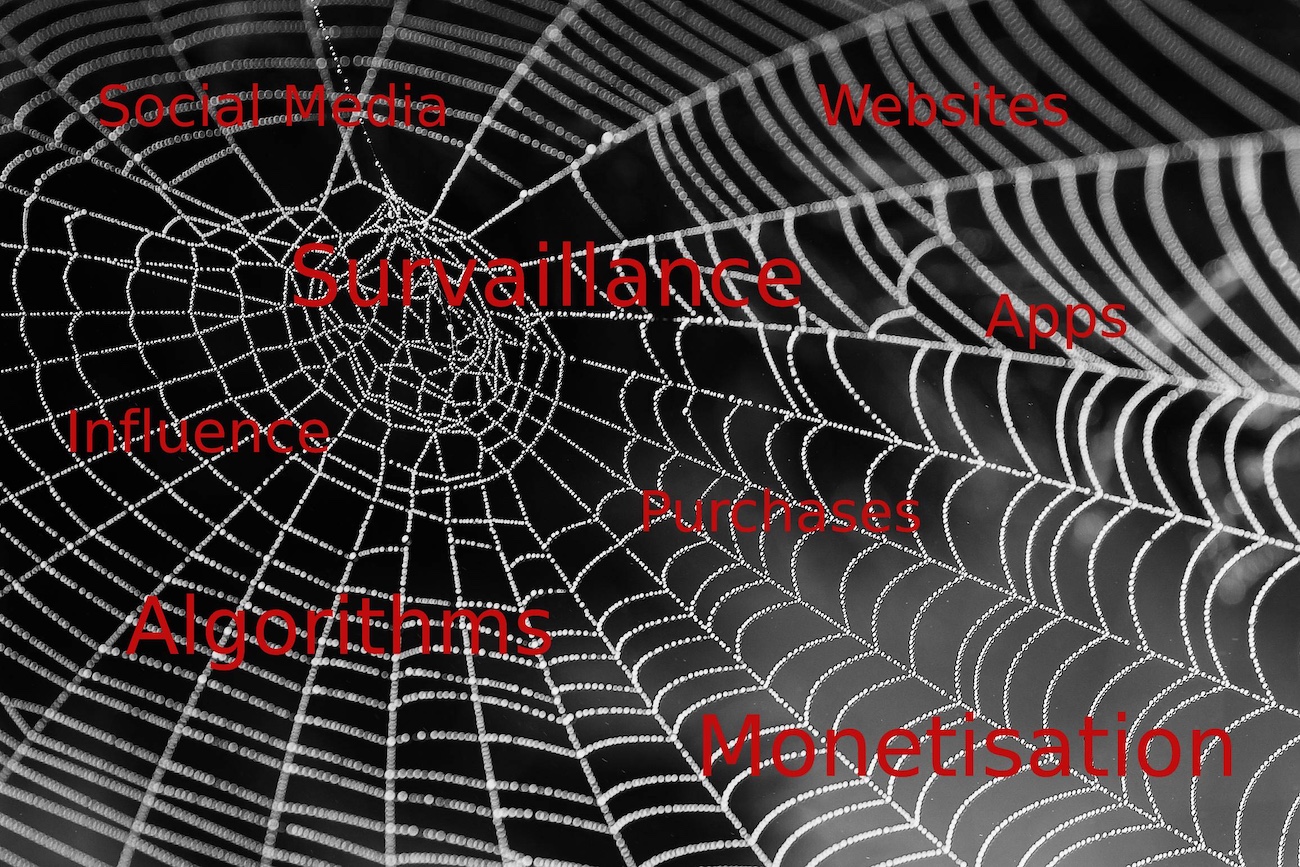
We often talk about “the web” as if it’s just something we use — a tool for communication, connection, and convenience. But few of us stop to consider that the real web we’re trapped in isn’t only digital. It’s social, psychological, economic, and deeply embedded in our daily lives. It’s a system of invisible threads designed to guide, influence, and often manipulate our thoughts, emotions, and decisions.
This article explores how we’re not just scrolling through content — we’re entangled in a multi-layered structure built to keep us compliant, distracted, and profitable. It’s time to see the full picture.
We’re Not Just Online — We’re Entangled
What most people consider “the web” is the digital sphere — websites, platforms, apps. But the real web we’re trapped in includes behavioural science, AI, economic systems, surveillance infrastructures, and cultural programming.
Take predictive analytics. This industry is expected to reach over $67 billion by 2030. Algorithms don’t just serve you content; they learn to anticipate your actions, desires, even your weaknesses. Every click, pause, and scroll is used to create a digital profile that’s refined to nudge you toward specific behaviours — purchases, political views, or emotional reactions.
Shoshana Zuboff, author of The Age of Surveillance Capitalism, describes this as the monetisation of “human futures.” Your behaviour becomes a commodity. The result? Platforms don’t just respond to what you want — they teach you what to want.
Behavioural Nudges: Designed to Hijack
Behavioural economics has shown that humans can be subtly manipulated through design choices. In digital spaces, this is called a “nudge.” But when AI-driven systems nudge us millions of times a day, across every platform, the result isn’t subtle.
Social media platforms use reinforcement learning — a type of AI that adjusts in real-time based on your behaviour — to maximise engagement. These systems are built to keep you reacting, scrolling, consuming. They amplify outrage, desire, and fear because those emotions keep people online longer.
Stanford University researchers found that dopamine responses triggered by social media mimic those from addictive substances. In other words, your favourite apps are engineered to act like slot machines — delivering intermittent rewards, keeping your brain hooked.
This isn’t about bad habits. This is by design. And it’s one of the strongest strands in the real web we’re trapped in.
Surveillance as Infrastructure
Surveillance is no longer exceptional — it’s ambient. A 2023 study from Surfshark found that over 70% of global internet activity is surveilled or filtered in some way. Your phone tracks your location. Your smart home listens for your voice. Every step, search, and silence can be monitored.
Facial recognition technologies are now used by law enforcement, marketing agencies, and private corporations. Clearview AI, for example, scraped over 30 billion photos from public websites to build one of the world’s largest biometric databases.
The psychological result is the “Panopticon Effect” — a theory by philosopher Michel Foucault which suggests that people behave differently when they know they are being watched. The more we’re surveilled, the more we self-censor, conform, and suppress.
The Illusion of Choice
It’s easy to believe we have freedom because we can choose between thousands of products, opinions, or lifestyles. But in reality, we’re usually choosing between options that have already been curated by algorithms or limited by design.
Google may index billions of pages, but 75% of people never click past the first page of search results. YouTube might host millions of videos, but what you see is shaped by proprietary recommendation systems. What rises to the top is often not what’s best — it’s what’s most profitable or politically safe.
The same goes for ideologies, body standards, and even identities. The cultural narratives that dominate are often manufactured and distributed by corporate and media interests, not organically chosen by the public.
The illusion of choice keeps us engaged. But it’s still a cage — just one with shiny walls.
Psychological Fragmentation and Disembodiment
The average adult now consumes more information in a single day than someone in the 15th century would encounter in a lifetime. But instead of being more informed, we’re often more fragmented.
The American Psychological Association has found that constant digital engagement can reduce attention spans, increase anxiety, and impair emotional regulation. The more time we spend online, the more we split ourselves into personas — one for work, one for social media, one for dating, one for family.
This fragmentation erodes authenticity. It also makes us easier to manipulate. Fragmented people are more likely to buy solutions, chase trends, or follow influencers in search of identity.
The Attention Economy: You Are the Product
Every second you spend online is monetised. Not by you — by the platforms you’re using. Your time, your clicks, your focus — these are the raw materials of a $200 billion data industry. Your behaviour is used not just to sell you things, but to train AI systems, influence elections, and forecast social movements.
Even worse, as these AI systems become more advanced, they will be used to replace human labour — often using data we unknowingly provided. In essence, we are building the very tools that may render us obsolete.
In the real web we’re trapped in, we are not users. We are resources.
Cultural Programming and Normalised Control
This web isn’t only made of data and devices. It’s also composed of deep cultural conditioning. From childhood, we’re trained to follow rules, trust authority, and suppress nonconformity. Educational systems often prioritise obedience over creativity. Media normalises narrow body types, lifestyle aspirations, and gender roles.
Those who challenge dominant narratives are quickly dismissed or labeled — “radical,” “extreme,” “dangerous,” or “conspiratorial.” This creates a climate where critical thinking is penalised and silence is rewarded.
It’s a form of psychological webbing — subtle, insidious, and highly effective.
Can We Escape the Web?
The answer isn’t a dramatic unplugging. Most of us can’t — and don’t want to — abandon technology entirely. But we can begin to step back, observe, and resist.
-
Protect your attention. Turn off unnecessary notifications. Create tech-free spaces.
-
Curate what you consume. Follow accounts that uplift rather than provoke.
-
Audit your beliefs. Ask where they came from, and who benefits from them.
-
Practice presence. Real-world connection disrupts digital disconnection.
-
Value your data. Treat it as capital — because it is.
The web loses power the moment we stop letting it define who we are and what we want.
Final Thoughts
The real web we’re trapped in is vast. It’s algorithmic, economic, emotional, and cultural. It’s built not just to observe, but to shape. Not just to connect, but to condition.
But once we become aware of it, we begin to reclaim power.
Reclaiming agency doesn’t require perfection — only presence. Start by noticing. Then questioning. Then choosing something different, even in small ways.
Because the most radical act in a system built for conformity is to think, feel, and live freely.
💥 Coming Soon:
🌶️ Diary of a Misbehaving Body Part – Entry#2 Inner Thighs – “Stop Rubbing Me the Wrong Way”
They’ve suffered silently in maxi dresses, screamed through spin class, and declared war on chafing season. Now the inner thighs are stepping up to speak their tender, unfiltered truth — and honey, they are not staying quiet any longer. Expect sass, sweat, and a deep yearning for breathable fabric.
Why You Won’t Want to Miss It:
It’s the blog entry for every babe who’s ever done the wide-leg waddle, cursed their summer shorts, or slapped on cream like it was war paint. Get ready to laugh, wince, and finally feel seen.
Thanks, my lovelies, for stopping by.
We would luv your feedback on this article., Email [email protected], you can comment on any of our stories and articles, why don’t you have your say?





Recent Comments